Does Medicare Cover Stairlifts? Costs & Coverage (U.S.) — 2026
If you're searching "stairlift cost medicare," here's the short version: Original Medicare (Parts A and B) does not pay for stairlifts, because Medicare treats them as a home modification rather than as covered medical equipment. This page explains why, what a stairlift actually costs, and the limited cases where a Medicare Advantage plan or another program might help.
Quick answer
Original Medicare does not cover stairlifts; expect to pay roughly $2,500-$8,000 installed for a straight unit and $10,000-$20,000 for a curved one, mostly out of pocket.
Planning information in U.S. dollars (USD)—not a quote.
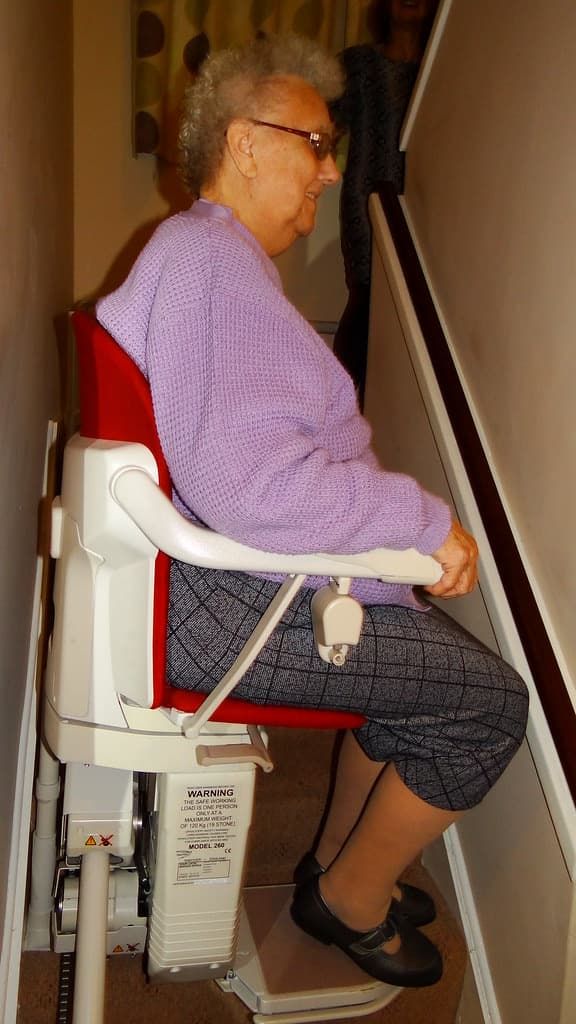
Does Original Medicare Cover Stairlifts? (No)
Original Medicare does not cover stairlifts. Medicare Part B pays for "durable medical equipment" (DME) ordered by your doctor for use in your home, but a stairlift does not meet Medicare's definition of DME.
Under Medicare's rules, DME is equipment that can withstand repeated use, primarily serves a medical purpose, generally isn't useful to someone who isn't sick or injured, and is appropriate for use in the home (see Medicare.gov, "Durable medical equipment (DME) coverage"). A stairlift is bolted to your staircase and becomes part of your home's structure, so Medicare classifies it as a home modification, not as portable medical equipment like a wheelchair or hospital bed.
The National Council on Aging (NCOA) confirms this plainly: "No, Medicare does not typically cover stair lifts, since these devices are not classified as durable medical equipment (DME) under Medicare Part B."
This page is for cost and decision-support only and is not medical advice. Talk with your doctor about your mobility needs.
Why Medicare Treats a Stairlift as a Home Modification
Medicare and most insurers group stairlifts with other accessibility home modifications rather than medical devices. According to an occupational therapist quoted by NCOA, "Because stair lifts attach to the home's structural components, insurers categorize stair lifts -- alongside ramps, widened doorways and bathroom grab bars -- as home modifications designed mainly for accessibility and convenience."
The key distinction Medicare draws:
- Covered DME can typically be rented, returned, refurbished, and reused by another patient (think wheelchairs, walkers, oxygen equipment).
- A stairlift is custom-fitted and permanently installed on your specific staircase, so it doesn't fit Medicare's DME criteria -- equipment that can withstand repeated use and primarily serves a medical purpose (Medicare.gov).
Because of this classification, a doctor's prescription saying a stairlift is medically necessary still will not make Original Medicare pay for it.
Medicare Advantage May Offer Limited Help (But Don't Count On It)
Medicare Advantage (Part C) plans are sold by private insurers and can include supplemental benefits that Original Medicare doesn't. Since federal rules expanded in 2019, some plans may offer home safety or fall-prevention benefits that occasionally touch home modifications.
What to keep in mind:
- NCOA notes that some Part C plans "provide limited coverage or allowances for home safety modifications that help prevent falls," but adds this "isn't common" and "likely will only cover a small percentage of the cost."
- When a plan does include a modification allowance, it is typically small -- often reported in the low-thousands of dollars -- which may not even cover a curved stairlift.
- Benefits vary widely by insurer and ZIP code, and usually require that the item be deemed medically necessary by a licensed provider.
Action step: Call the member services number on the back of your insurance card and ask specifically whether your plan covers stairlifts or home modifications, what the cap is, and what documentation is required. Get the answer in writing before you buy.
What a Stairlift Actually Costs
Since you'll likely pay out of pocket, here are typical installed price ranges to budget against (national baselines; your quote depends on staircase shape, length, and brand):
- Straight stairlift: ~$2,500-$8,000
- Curved stairlift: ~$10,000-$20,000 (custom-bent rail drives the higher price)
- Outdoor stairlift: ~$4,000-$12,000
Ongoing costs to factor in:
- Service/maintenance plans: roughly $100-$300 per year
- Battery replacement: about $200-$300 every 1-3 years (most stairlifts run on rechargeable batteries so they work during power outages)
These figures line up with NCOA, which cites new stairlifts averaging $2,500-$8,000, used units around $2,000-$3,000, and short-term rentals at $300-$500 per month -- renting usually only makes sense for temporary needs such as recovery after surgery.
Other Programs That May Help Pay
If Medicare won't cover your stairlift, these programs sometimes do (eligibility rules apply; verify with each program):
- Medicaid: Many states cover stairlifts as a medically necessary home modification through Home and Community-Based Services (HCBS) waiver programs. Rules and waiting lists vary by state.
- VA (for veterans): The Home Improvements and Structural Alterations (HISA) grant pays up to $6,800 lifetime for service-connected conditions (also available for non-service-connected conditions if you have a service-connected disability rated 50% or higher) and up to $2,000 otherwise -- but official VA policy lists "porch lifts, and stair glides" as removable equipment HISA does not cover (prosthetics.va.gov). In practice, veterans more often obtain a stairlift through the VA's Prosthetic and Sensory Aids Service, Veteran-Directed Care (VD-HCBS), or -- for severe service-connected disabilities -- SAH/SHA housing grants. Ask your VA care team which pathway applies before assuming HISA will pay.
- Tax deduction: Under IRS Publication 502, the cost of a stairlift can count as a deductible medical expense if its main purpose is medical care. The IRS treats stairlifts as not adding value to the home, so the full cost may qualify (subject to the rule that total medical expenses must exceed 7.5% of adjusted gross income). Confirm with a tax professional.
- Area Agencies on Aging and nonprofits: Local aging agencies sometimes offer grants or low-cost loan programs for accessibility upgrades.
Frequently asked questions
Will Medicare pay for a stairlift if my doctor says it's medically necessary?
No. A doctor's note of medical necessity does not change the outcome with Original Medicare, because a stairlift is classified as a home modification rather than durable medical equipment (DME). Some Medicare Advantage (Part C) plans may offer a limited home-modification allowance, so check directly with your plan.
How much does a stairlift cost if I pay out of pocket?
Installed prices typically run about $2,500-$8,000 for a straight stairlift, $10,000-$20,000 for a curved one, and $4,000-$12,000 for an outdoor model. Budget another roughly $100-$300 per year for a service plan and about $200-$300 every 1-3 years for battery replacement.
Are there any programs that do cover stairlifts?
Possibly. State Medicaid HCBS waiver programs may cover a medically necessary stairlift, veterans may be able to get a stairlift through VA channels such as the Prosthetic and Sensory Aids Service or Veteran-Directed Care (note: the VA's HISA grant officially excludes stair glides as removable equipment), and a stairlift may be deductible as a medical expense under IRS Publication 502. Eligibility rules vary, so verify with each program before buying.
Want to estimate your range in under a minute? Try the free stairlift cost calculator.
Sources
- Medicare.gov - Durable medical equipment (DME) coverage:
https://www.medicare.gov/coverage/durable-medical-equipment-dme-coverage - National Council on Aging (NCOA) - Does Medicare Cover Stair Lifts?:
https://www.ncoa.org/article/medicare-and-stair-lifts/ - U.S. Department of Veterans Affairs - Home Improvements and Structural Alterations (HISA):
https://www.prosthetics.va.gov/psas/HISA2.asp - IRS - Publication 502, Medical and Dental Expenses:
https://www.irs.gov/publications/p502 - Medicare.org - Will Medicare Cover a Stair Lift? (context):
https://www.medicare.org/articles/will-medicare-cover-a-stair-lift/ - Fixr - Stairlift Installation Cost:
https://www.fixr.com/costs/stairlift-installation